PARA-Programming
Structured AI-Assisted Development
The Problem
AI coding assistants are powerful, but...
- No memory across sessions
- No audit trail of decisions
- Token costs add up fast
- Work disappears when you close the session
Challenges
How many times have you...
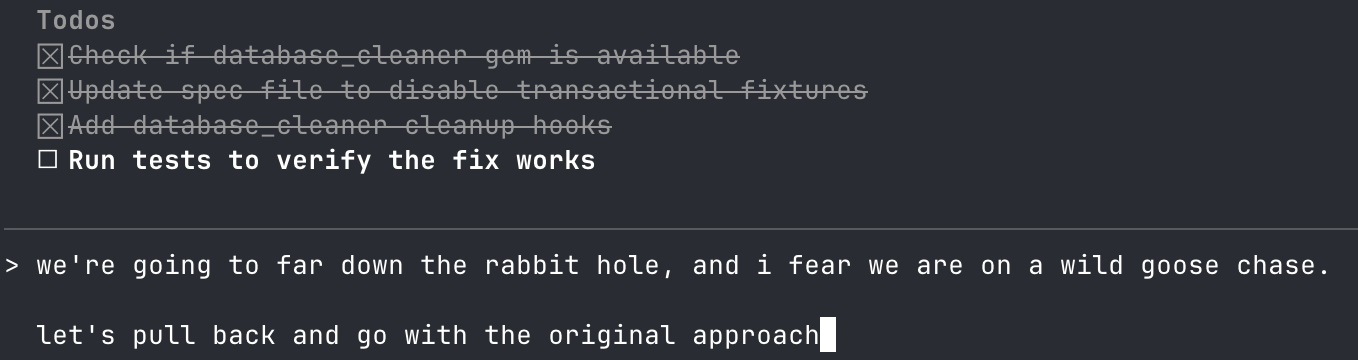
What if your AI assistant had...
Persistent Memory
Complete History
Professional Workflow
Building a Second Brain
"Your mind is for having ideas,
not holding them."
— Tiago Forte
A shared cognitive system between
human and AI—persistent, auditable,
and evolving with each project.
PARA-Programming
A structured methodology for
professional AI-assisted development
The PARA Framework
Projects → context/plans/
Areas → context/context.md
Resources → context/data/
Archives → context/archives/
Each project gets a structured memory system
Five-Step Workflow
Every task follows the same process.
Consistent. Auditable. Repeatable.
Pair-Programming with AI
Work with AI as a collaborative partner,
not just a code generator
Plans ensure shared understanding
Reviews maintain human oversight
Summaries capture joint decisions
Roles may flip, but context stays synchronized
How It Works
Plan: Document approach
Review: Human approval
Execute: Work in git branches, commit after every todo
Summary: What changed & why
Archive: Preserve history
Complete Audit Trail
Every decision documented.
Every change traceable.
Six months later, you know exactly why.
Plan: "Why are we doing this?"
Commits: "What changed, step by step?"
Summary: "What did we learn?"
Persistent Context
Resume work across sessions
Friday 5pm: Close laptop
Monday 9am: Pick up exactly where you left off
Context lives in files, not just memory.
Token Efficiency
Load only the context you need
Use fewer tokens by design
Plan-scoped context vs. entire codebase
Reference files on-demand, not upfront
Result: Lower costs, faster responses
Example: Add Authentication
1. Plan: /para-program:plan "add authentication"
→ Creates structured plan document
2. Review: Human validates approach
3. Execute: /para-program:execute
→ Creates branch, tracks todos, commits incrementally
4. Summarize: /para-program:summarize
→ Documents what changed and why
Persistent Memory Layer
context/
  ├── data/            # Datasets, inputs, API payloads
  ├── plans/           # What you're planning to do
  ├── summaries/       # What you did and why
  ├── archives/        # Historical snapshots
  ├── servers/         # MCP tool wrappers
  └── context.md       # Active work state
Files survive session boundaries.
Your work persists.
MCP Integration Strategy
Model Context Protocol for efficient data access
Lazy Loading: Load only necessary tool definitions
Preprocessing: Filter large datasets in code before sending to model
Privacy: Keep sensitive data outside context when possible
context/servers/ holds tool wrappers for on-demand access
Get Started in 5 Minutes
                    # Install the plugin
/plugin install para-program@brian-lai/para-programming-plugin

# Initialize in your project
/para-program:init

# Start your first task
/para-program:plan "your task here"
Works with Claude Code, Cursor, Copilot, and more.
Why This Works
Mirrors how humans and LLMs process information
Prompt window = Working memory (short-term)
Context directory = Long-term memory
context.md = Prefrontal cortex (what to focus on)
Keep only relevant context active → more accurate reasoning
Backed by Research
Anthropic's MCP research validates this approach
LLMs perform best with minimal, purposeful context
Externalized computation lets models focus on reasoning
Internal benchmarks: up to 98.7% token reduction
while improving accuracy and determinism
Build Professional Software
with AI
github.com/brian-lai/para-programming-plugin
Questions?